
As adults grow older, staying mobile safely becomes more important for maintaining independence, confidence, and quality of lifeThe general well-being of individuals and societies, outlining negative and positive features of lif.... The best walkers for elderly adults can provide support with balance, reduce the risk of falls, and make everyday movement easier at home or outdoors.
Whether you are searching for a walker for elderly loved ones who need basic support or comparing mobility walkers for seniors with seats, brakes, and storage, the right choice depends on the user’s strength, balance, and daily routine. Some seniors do best with a standard walker, while others benefit more from a rollator or a wheeled model that is easier to maneuver.
In this guide, we cover the best walkers for seniors, the different types available, what features to look for, and how to choose the safest option for long-term comfort and mobility.
Mobility challenges can happen for many reasons, including aging, injury, surgery, joint pain, balance issues, or recovery from illness. A walker can help older adults stay active and feel more secure while moving around the house, running errands, or spending time outdoors.
Choosing the right walker is important because every senior has different needs. Some people need maximum stability and weight support, while others want a lightweight option that is easier to steer and transport. The right walker should feel comfortable, fit the user properly, and support safe movement without being difficult to use.
A good walker can also encourage seniors to remain active, which is an important part of preserving independence and supporting overall wellness.
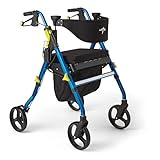


Here are some of the best walkers for elderly adults, based on support, comfort, convenience, and overall value.
The Medline Premium Empower Rollator Walker is a strong option for seniors who want a comfortable rollator with useful built-in features. It includes a thick cushioned backrest, memory foam seat, and ergonomic hand grips for a more comfortable experience during longer outings.
This model also comes with a storage bag and cup holder, making it practical for daily use. The eight-inch wheels help it roll smoothly on a variety of surfaces, and the frame folds for easier storage.
Seniors who want comfort, storage, and a padded seat for regular use.
Buyer’s Ratings: 4.5 out of 5 based on 1,354 Amazon Buyers
The Drive Medical Nitro Euro Style Rollator Walker is a premium choice for seniors who want a sleek, sturdy rollator with excellent steering. Its larger front wheels help improve maneuverability, especially for outdoor use or uneven surfaces.
It also features adjustable handle height and back support, plus a built-in braking system for better control. The foldable frame makes it easier to store in a car trunk or closet.
Seniors who want a more advanced rollator for both indoor and outdoor use.
Buyer’s Ratings: 4.8 out of 5 based on 11,672 Amazon Buyers
The Hugo Elite Rollator Walker is a good fit for seniors who are shorter in height and need a walker that feels proportionate and comfortable. It features adjustable height settings, eight-inch swivel wheels, a padded seat, and a backrest.
This walker is suitable for both indoor and outdoor use and includes multiple storage options, which adds convenience for day-to-day errands and appointments.
Petite seniors who need a walker with a more accommodating height range.
No products found.
The Vive Folding Walker is a simple and affordable option for seniors who need dependable support without extra features. It is a two-wheeled walker with detachable front wheels, making it a flexible choice for those who want a more basic mobility aid.
Its straightforward design makes it easier to use for seniors who do not want a seat, storage pouch, or more complex braking system.
Budget-conscious seniors who want basic support and a simple frame.
Buyer’s Ratings: 4.7 out of 5 based on 478 Amazon Buyers
The Lumex HybridLX Rollator Transport Chair is ideal for seniors who may need both walking support and occasional seated transport. It works as a rollator and a transport chair, which makes it useful for longer outings when fatigue becomes an issue.
This model includes leg rests, a wide seat, and a storage basket. It is a practical choice for caregivers and older adults who want added versatility in a single device.
Seniors who want a walker that can also function as a transport chair.
Buyer’s Ratings: 4.7 out of 5 based on 401 Amazon Buyers
When you scour the market for the best walker
The best walkers for seniors are the ones that match the user’s level of mobility, home environment, comfort preferences, and safety needs. There is no single option that works for everyone.
Some seniors need the strong support of a standard walker. Others prefer wheeled walkers or rollators because they are easier to push and often come with a seat, hand brakes, and storage. When comparing walkers for elderly adults, it helps to think about where the walker willA legal document that states how a person's property should be managed and distributed after death. be used, how much support is needed, and whether the user will benefit from extra features.
A walker is a mobility device designed to provide support and stability while walking. It usually has a lightweight frame, hand grips, and four points of contact with the ground. Some walkers also include wheels, seats, storage pouches, and hand brakes.
Walkers are commonly used by seniors and by people recovering from injury or surgery. They can help reduce fall risk, improve balance, and make daily movement safer and more manageable.
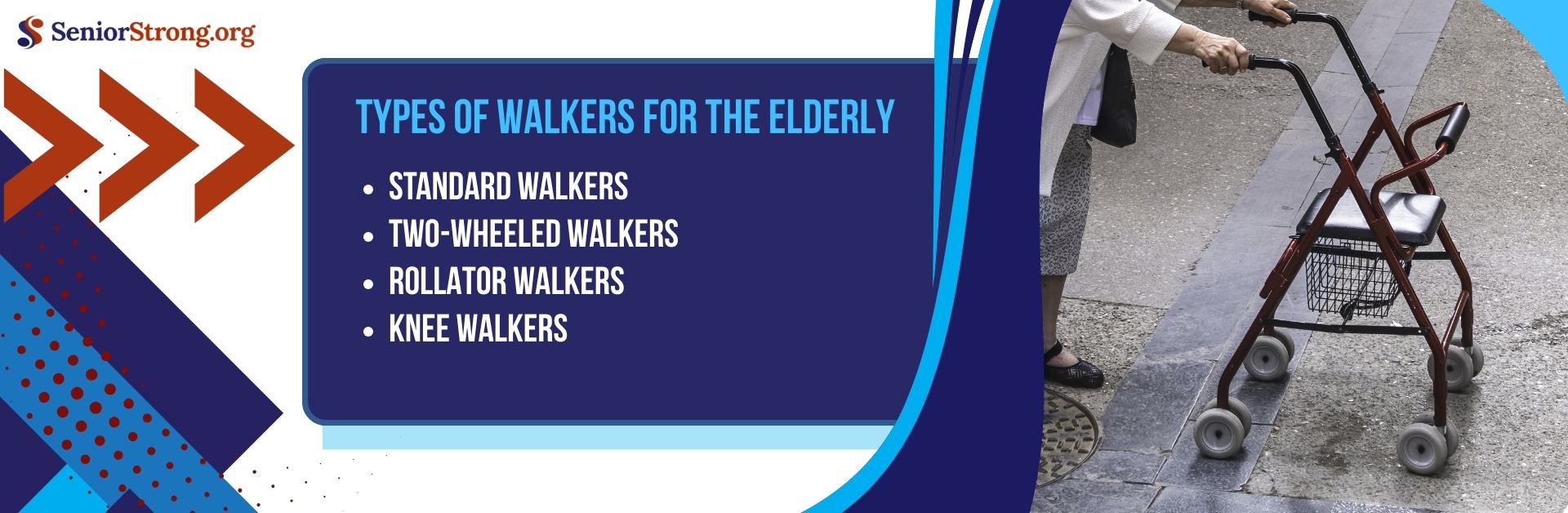
Not all walkers are built the same. Understanding the main types can help you choose the best option for your needs.
A standard walker has four legs and no wheels. The user lifts it slightly with each step. This type of walker is best for seniors who need maximum support and can safely lift the frame as they move.
Standard walkers are often a good choice for people recovering from surgery or for those who need to place significant weight on the device.
A two-wheeled walker has wheels on the front legs and standard tips on the back legs. This makes it easier to move than a standard walker while still providing solid support.
These walkers are often a good middle ground for seniors who need more help than a cane can offer but do not want a full four-wheel rollator.
Rollators usually have four wheels, hand brakes, and a built-in seat. They are ideal for seniors who want easier maneuverability and may need to stop and rest during longer walks.
Many mobility walkers for seniors fall into this category because they are practical for indoor and outdoor use. However, they may not be the best choice for someone who needs heavy weight-bearing support.
A knee walker is designed for people recovering from foot or ankle injuries. Instead of walking normally, the user rests the injured leg on a padded platform and propels the device with the other leg.
This type is not typically the first option for age-related mobility decline, but it can be useful in temporary recovery situations.
Choosing the right walker for elderly adults involves more than picking the most popular model. Here are the most important factors to consider.
If the user needs maximum balance support, a standard walker or two-wheeled walker may be the safest choice. If they have better balance and want something easier to push, a rollator may be more comfortable and convenient.
Smaller wheels often work well indoors on smooth surfaces. Larger wheels usually perform better outdoors, especially on sidewalks, driveways, or slightly uneven terrain.
If the walker will be used in both settings, look for a model that is easy to steer and stable enough for daily transitions.
Some walkers for elderly adults come with padded seats and backrests, which can make a big difference for users who tire easily. A seat is especially useful during appointments, shopping trips, or longer walks.
Comfortable grips, breathable materials, and padded support can also improve the overall experience.
A walker should fit the user correctly. If it is too high or too low, it can cause discomfort and make movement less safe. Adjustable handle height is an important feature because it allows for a more natural walking posture.
Hand brakes are especially important on rollators. They help users slow down, stop safely, and lock the wheels before sitting. Seniors with weaker grip strength may want to look for brake systems that require less hand pressure.
A lightweight, foldable walker is easier to transport and store. This matters if the user travels often, rides in the car frequently, or has limited storage space at home.
Storage bags, baskets, and pouches can also be helpful for carrying personal items, medications, water bottles, or small purchases.

The cost of walkers for seniors varies depending on the type, build quality, and features included.
Basic standard walkers are often the most affordable. Two-wheeled walkers usually cost a bit more, while rollators with seats, braking systems, and extra storage tend to be more expensive. Hybrid models that also function as transport chairs are usually at the higher end of the price range.
In general, a simple walker may cost less than a premium rollator, but it is worth paying attention to comfort, safety, and ease of use rather than price alone.
In some cases, walkers may be covered by insurance or MedicareA federal health insurance program for people who are 65 or older, certain younger people with disab... when they are considered medically necessary and prescribed by a healthcare provider. Coverage often depends on the type of walker, the user’s medical needs, and the specific insurance plan.
Before buying, it is a good idea to check with the insurance provider and ask whether the walker qualifies as durable medical equipment. This can help you understand whether part or all of the cost may be reimbursed.
Several brands are well known for producing walkers and rollators for older adults. Some of the most recognized names include:
The best brand is not always the one with the most name recognition. Instead, focus on the model that offers the right level of support, comfort, durability, and ease of use for the individual senior.
You should choose a walker based on the user’s balance, strength, comfort needs, and daily routine. A standard walker is often better for maximum support, while a rollator may be better for seniors who want easier movement and a built-in seat.
Walkers for seniors vary in price depending on type and features. Basic walkers are usually more affordable, while premium rollators and transport-chair hybrids tend to cost more.
Many walkers for elderly adults are sold online through large retailers and medical supply stores. Some people also prefer to shop in person so they can compare models and see how the walker feels before buying.
You can often buy a walker without a prescription, but a prescription may be needed if you want insurance or Medicare coverage. It is also a good idea to speak with a healthcare professional before choosing one.
Yes, walkers with wheels can be safe when they are the right fit for the user and used properly. Models with reliable brakes, stable frames, and the correct handle height are generally the best choice for safety.
A standard walker usually has no wheels and offers more support, while a rollator has wheels, brakes, and often a seat. Rollators are easier to maneuver, but they are not always the best choice for seniors who need heavy weight-bearing support.
Finding the best walker for elderly adults is about more than convenience. The right mobility aid can help seniors stay active, feel more confident, and move through daily life with greater safety and independence.
Some older adults need a simple walker with strong support, while others benefit more from mobility walkers for seniors that include wheels, seats, and hand brakes. By focusing on fit, stability, comfort, and intended use, you can narrow down the best option for long-term support. If you are exploring more ways to support safe movement and independence, read our guide to Top Mobility Equipment For Elderly Individuals to compare walkers, scooters, wheelchairs, and other helpful devices.