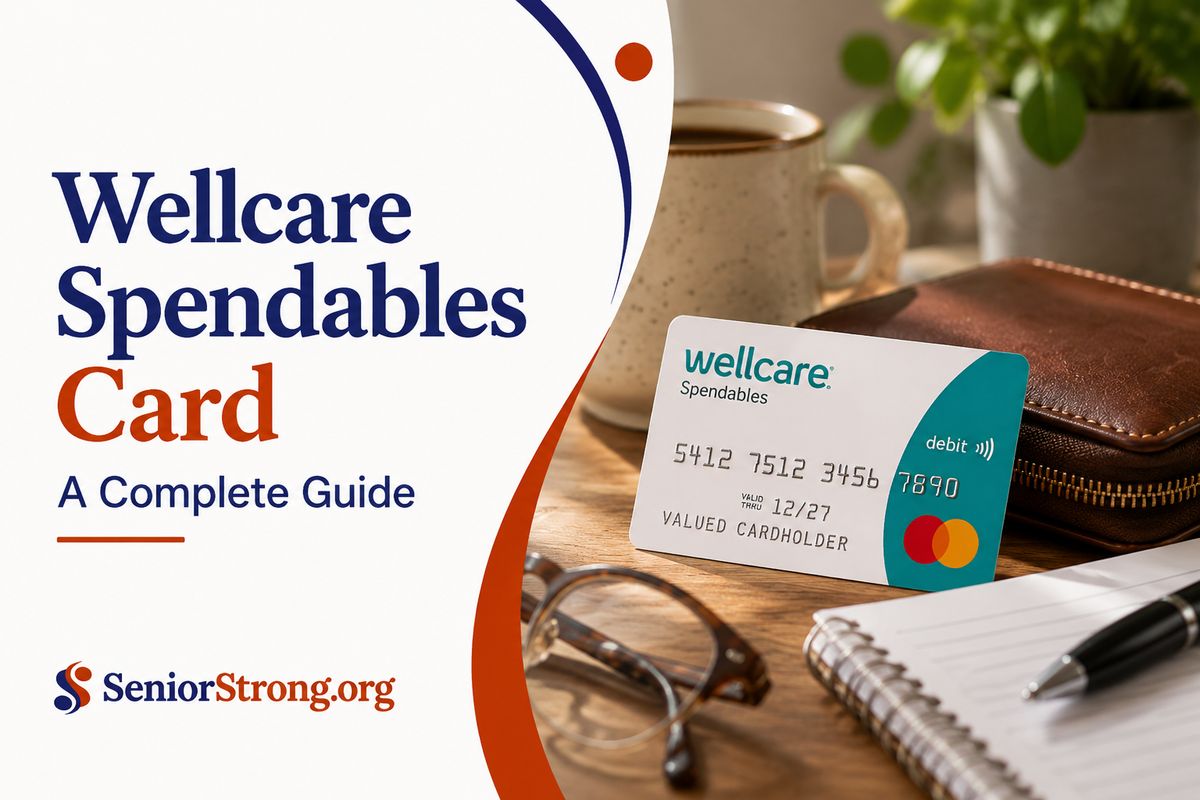
Yes, there is a WellCare debit card. It is called the WellCare Spendables card, a preloaded Visa debit card that gives eligible MedicareA federal health insurance program for people who are 65 or older, certain younger people with disab... Advantage members a set monthly allowance for health-related purchases. If you have heard it called the WellCare Flex Card or grocery allowance card, those are older names for the same benefit. The card replaced the WellCare Flex Card in 2024 and now serves members across Wellcare's 32-state footprint, with funds usable at more than 66,000 retailers nationwide.
This guide explains who gets the card, what it pays for, what changed in 2026, and how to avoid a declined transaction at checkout.
The WellCare Spendables card is a preloaded Visa debit card that loads a set dollar amount onto your account, usually on the first of each month, to pay for approved health items and services. It works like a regular debit card at checkout, but only for items your plan covers. Members activate it once, then spend it in-store, online, or through a mobile app.
WellCare is the Medicare brand of Centene Corporation, and the Spendables card consolidated several smaller benefits, including the old Flex Card, into one card in 2024. Earlier versions only covered over-the-counter products. The current program can include healthy food, gas at the pump, utility assistance, rent or mortgage help, and home safety items for members who qualify.
The card is managed through a platform called Healthy Benefits+, operated by WellCare's vendor Solutran. You use that platform and its app to check your balance, scan products for eligibility, and shop online. Your Evidence of Coverage (EOC) is the document that lists the exact allowance and rules for your specific plan.
You qualify for the WellCare Spendables card if you are enrolled in a WellCare Medicare Advantage or Dual Eligible Special Needs Plan (D-SNP) that includes the benefit. D-SNP plans, which carry the most generous version of the card, require eligibility for both Medicare and MedicaidA state and federal program that provides health coverage to eligible low-income adults, children, p....
Medicare eligibility generally means you are 65 or older, under 65 with a qualifying disability, or diagnosed with end-stage renal disease (ESRD)The final stage of chronic kidney disease in which the kidneys no longer function well enough to mee... or ALS. Medicaid eligibility varies by state and depends on income, assets, family size, and disability status. You can confirm the rules through WellCare's dual-eligibility page or the official Medicare.gov site.
Dual-eligible members do not have to wait for the Annual Enrollment Period, which runs from October 15 to December 7. They can often enroll or switch plans during a Special Enrollment Period at other times of the year.
Standard over-the-counter benefits go to every member with the card. The bigger uses, such as healthy food, gas, rent, and utilities, fall under Special Supplemental Benefits for the Chronically Ill (SSBCI), and they carry stricter rules. To qualify for SSBCI benefits, you must meet all three criteria at the same time:
WellCare uses claims data to identify eligible members automatically. New members without enough claims history can use a manual process where their provider submits an SSBCI attestation confirming the diagnosis.
The card covers six benefit categories, but access depends on your plan and SSBCI status. Over-the-counter items are available to all members. Everything else requires chronic-condition approval. The table below breaks down each category and its eligibility requirements.
| Benefit Category | Examples of Eligible Items | Eligibility Requirement |
|---|---|---|
| Over-the-Counter (OTC) | Allergy and sinus meds, cold and flu relief, dental care, diabetes supplies, first aid, pain relievers | Standard D-SNP benefit |
| Healthy Food | Fresh or frozen fruits and vegetables, meat, seafood, dairy, frozen meals, whole grains, beans, nuts | SSBCI approval required |
| Gas Pay-at-Pump | Fuel at the pump at participating stations such as Shell, BP, Exxon, Speedway, Circle K | SSBCI approval required |
| Utilities Assistance | Electric, gas, water, trash, phone, internet or cable, home heating oil | SSBCI approval required |
| Rent / Mortgage | Apartment rent, housing rent, rental agency payments, home lender payments | SSBCI approval required |
| Home Improvement | Grab barsSafety devices installed in bathrooms and other areas to help seniors maintain balance and prevent f..., safety chairs, non-slip floor coverings, portable AC, humidifiers, pest control supplies | SSBCI approval required |
Note: The card cannot be used for streaming services, automated recurring utility payments, or cash back at ATMs. For gas, you must pay at the pump. Transactions attempted inside the station willA legal document that states how a person's property should be managed and distributed after death. be declined. Home safety items are a natural overlap with aging-in-place home modifications.
You must activate the WellCare Spendables card before the first use. Activation takes a few minutes and unlocks the loaded balance. Follow these steps to get the card working and to spend it correctly.
The Spendables card is accepted at over 66,000 participating retailers, including Walmart, CVS, Walgreens, Kroger, Albertsons, Dollar General, and Publix. If a balance check confuses you, our guide on how to check your WellCare Flex Card balance walks through every method in detail.
The WellCare debit card comes with several program names and acronyms that are easy to confuse. Here is what each one means in plain language.
The most important 2026 change came from CMS, not WellCare. As of January 1, 2026, the Centers for Medicare & Medicaid Services requires Medicare Advantage plans to validate and document each member's qualifying chronic condition before granting SSBCI benefits like the grocery, utility, and rent allowances.
In a 2026 provider notice, UnitedHealthcare explained that the rule applies to all Special Needs Plans and that documentation must include an eligible diagnosis code or a provider attestation. In practice, members without a documented condition on file will not see the food portion of the card activate. If you or a parent has a qualifying diagnosis, get the attestation filed now rather than waiting.
Two more 2026 updates matter. First, the card shifted from quarterly to monthly loading, which makes budgeting easier across the year. Second, plans must now send members a mid-year unused-benefit notice between June 30 and July 31, 2026, listing what is still loaded on the card. According to U.S. News & World Report, Medicare Advantage grocery allowances generally range from $25 to $200 per month in 2026, so the exact figure depends heavily on your plan.
The single most common mistake is assuming the grocery allowance is automatic. It is not. The OTC benefit is automatic. The food, rent, and utility money is gated behind the SSBCI chronic-condition review, and that gate got stricter in 2026.
Yes. WellCare members can earn additional funds through the WellCare Rewards program by completing healthy activities. Members can earn up to $225 per plan year for actions such as completing an Initial Health Assessment, getting preventive screenings, and watching educational videos.
Reward funds load directly onto the Spendables card, but the process can take several weeks because the provider must submit the claim and the plan must process it before funds are released. Reward dollars expire on January 31 of the following year, a different deadline from the December 31 expiration on your monthly allowance.
There is a WellCare debit card, and it is the Spendables card. For dual-eligible and chronically ill members, the combination of OTC, grocery, utility, rent, and home safety coverage on one Visa card can offset hundreds of dollars in monthly costs. The catch in 2026 is documentation. CMS now enforces stricter chronic-condition verification, so the grocery and utility portions will not activate without a qualifying diagnosis on file.
As of 2026, the smartest move is to confirm what your specific plan loads, file an SSBCI attestation if you have a qualifying condition, and spend the balance before the December 31 deadline.
To compare WellCare's card against other carriers and see the full benefit breakdown, visit our WellCare Flex & Food Card resource hub.
Yes. The WellCare Flex Card and the WellCare Spendables card are the same benefit. WellCare replaced the Flex Card name with Spendables in 2024 and consolidated several smaller card benefits into one Visa debit card. Older plan materials may still use the Flex Card name.
The amount varies by plan and state. Some plans load $121 per month, while others provide $184 or more. Medicare Advantage grocery allowances generally range from $25 to $200 per month in 2026. Check your plan's Evidence of Coverage or Summary of Benefits for your exact figure.
No. The card cannot be used at an ATM, for cash back at the register, or for streaming services. It works only for approved health-related purchases at participating retailers and providers, and only up to your available balance.
The three most common reasons are insufficient funds, ineligible items, and missing SSBCI approval for food or utilities. If a pump or PIN-required retailer declines the card, try running it as credit instead. For ongoing issues, call the Spendables support line at 1-833-647-9661.
Unused funds roll over from month to month within the plan year, but they expire on December 31. Money left on the card at year-end is forfeited. Reward funds follow a separate calendar and expire on January 31 of the following year.
The card is accepted at over 66,000 retailers nationwide, including Walmart, CVS, Walgreens, Kroger, Albertsons, Dollar General, and Publix. It works anywhere Visa is accepted for approved utility, rent, or gas-at-the-pump payments for eligible members.