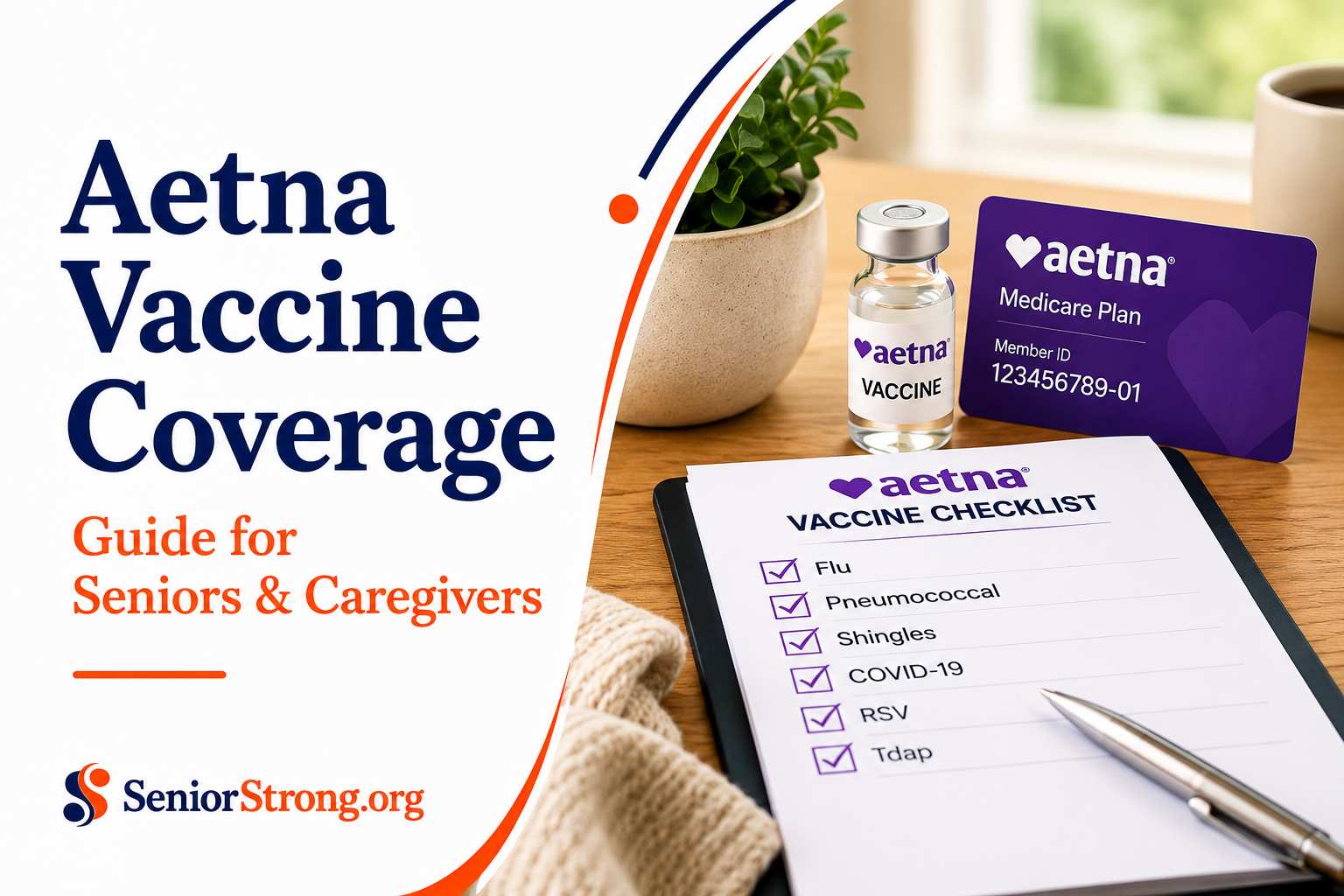
Aetna covers a comprehensive set of vaccines at $0 out-of-pocket for most members when administered by an in-network provider or pharmacy, including the annual flu shot, pneumococcal vaccines, RSV, shingles (Shingrix), Tdap, and HPV. This coverage is driven by the Affordable Care Act's preventive services rule and the recommendations of the CDC's Advisory Committee on Immunization Practices (ACIP).
For seniors on Aetna Medicare Advantage or Aetna Medicare Part DA program that helps cover the cost of prescription drugs, available to anyone who has Medicare. plans, vaccine coverage is split between MedicareA federal health insurance program for people who are 65 or older, certain younger people with disab... Part B (which pays for flu and pneumococcal shots) and Medicare Part D (which pays for shingles, RSV, and most other adult vaccines). According to the Centers for Medicare & Medicaid Services, all ACIP-recommended adult vaccines have been available to Medicare Part D enrollees at $0 cost-share since 2023, a change that eliminated hundreds of dollars in out-of-pocket costs per shot.
This 2026 guide explains exactly what Aetna vaccine coverage looks like, who qualifies, and how to confirm $0 cost before you go.
Aetna's vaccine coverage is shaped by three forces: federal law, clinical evidence, and the specific plan a member is enrolled in. For most Aetna members, ACIP-recommended vaccines are covered at $0 because the Affordable Care Act requires non-grandfathered health plans to cover preventive services without cost-sharing.
The CDC's Advisory Committee on Immunization Practices publishes the official adult immunization schedule each year. Insurers, including Aetna, translate those recommendations into specific coverage rules through documents called Clinical Policy Bulletins (CPBs), which define exact age criteria, dosing requirements, and any medical necessity rules for each vaccine. Aetna publishes its CPBs publicly on Aetna.com so members and providers can verify coverage criteria.
For seniors, the picture is slightly different. Vaccine coverage on Medicare is split between Medicare Part B and Medicare Part D, and which one pays depends on the vaccine itself, not on member preference. The ACA preventive services rule still applies to many Aetna plans, but Medicare members work under a slightly different framework, explained later in this guide.
Aetna covers the following ACIP-recommended adult vaccines at zero out-of-pocket cost for most members. Exact eligibility for each vaccine depends on age, health status, and Aetna's medical necessity criteria.
| Vaccine | Who Aetna Covers | Coverage Notes |
|---|---|---|
| Influenza (flu) | All members 6 months and older | Annual coverage: standard, high-dose, adjuvanted, recombinant, and intranasal options |
| Pneumococcal (PCV15, PCV20, PCV21) | Children under 5; adults 19-49 with risk factors; all adults 50 and older | The specific vaccine depends on age and prior pneumococcal vaccination history |
| RSV (Arexvy, Abrysvo, mRESVIA) | Adults 75 and older; adults 50 to 74 at increased risk | Single lifetime dose; no annual booster |
| Shingles (Shingrix) | Adults 50 and older; immunocompromised adults 18 and older | Two-dose series given 2 to 6 months apart |
| HPV (Gardasil 9) | Ages 9 to 45 | Two- or three-dose series, depending on age at first dose |
| Tdap | All adults 65 and older; pregnant individuals; wound management | Booster recommended every 10 years |
| Hepatitis A and B | Risk-based criteria; Hep B for diabetics and high-risk seniors | Hep B covered under Part B for high-risk Medicare members |
| COVID-19 | All members 6 months and older | Current ACIP-recommended formulations |
Aetna considers annual influenza vaccination medically necessary for all members aged 6 months and older, in line with CDC recommendations. Coverage includes standard trivalent injectables, the preservative-free formulations preferred by many older adults, the higher-dose Fluzone for seniors 65 and older, recombinant flu vaccines like Flublok for adults 9 and up, and the intranasal FluMist for ages 2 to 49.
Higher-dose and adjuvanted flu vaccines (Fluzone High-Dose, Fluad) are specifically recommended for seniors and produce stronger immune responses than standard formulations. Aetna covers these at $0 for Medicare members aged 65 and older when administered by an in-network provider.
Pneumococcal disease can cause severe pneumoniaAn infection that inflames the air sacs in one or both lungs, which can range in seriousness from mi..., bloodstream infections, and meningitis, with seniors among the highest-risk groups. Aetna covers the 15-valent (PCV15), 20-valent (PCV20), and newer 21-valent (PCV21) pneumococcal conjugate vaccines, with the specific vaccine depending on age and prior vaccination history. All adults aged 50 and older are eligible for PCV15, PCV20, or PCV21 regardless of underlying health status.
This is a recent expansion. ACIP lowered the age recommendation from 65 to 50 in late 2024, and Aetna's Clinical Policy Bulletin reflects that change. Seniors previously vaccinated under the older PPSV23 schedule may still be eligible for an updated PCV15 or PCV20 dose, depending on the timing of their original vaccination.
Respiratory syncytial virus (RSV) is a serious cause of hospitalization among adults over 65. Aetna covers a single lifetime dose of the RSV vaccine for all adults aged 75 and older, and for adults aged 50 to 74 who have an increased risk of severe RSV disease, including chronic heart or lung disease, weakened immune systems, and certain other conditions. Three RSV vaccines are currently FDA-approved and covered by Aetna: Arexvy, Abrysvo, and mRESVIA.
The CDC recommends getting the RSV vaccine in late summer or early fall, before the RSV season begins. Because the vaccine is a single lifetime dose, timing matters. There is no annual RSV booster the way there is for flu.
Shingles is a painful rash caused by reactivation of the same virus that causes chickenpox. Aetna covers Shingrix, the recombinant herpes zoster vaccine, as a two-dose series for all adults aged 50 and older, and for adults aged 18 and older with immunodeficiencyA decrease in the body's ability to fight infections and diseases, more common in elderly due to agi... or immunosuppression (including chemotherapy patients, organ transplant recipients, and people living with HIV).
Aetna does not cover booster doses beyond the standard two-dose series because ACIP does not currently recommend them. The two doses are given 2 to 6 months apart, and the second dose should be completed even if the first dose is delayed.
The HPV vaccine prevents cervical, anal, and other cancers caused by certain strains of human papillomavirus. Aetna covers the 9-valent HPV vaccine (Gardasil 9) for individuals aged 9 to 45, with routine vaccination recommended at ages 11 or 12. Catch-up vaccination is covered for females through age 26 and males through age 21, with extended coverage available up to age 45 in some circumstances. This vaccine is most relevant for the adult children of senior readers who may be making catch-up vaccination decisions for their own families.
The Tdap vaccine protects against three bacterial diseases and is specifically recommended for adults aged 65 and older. Aetna covers Tdap as preventive care for all adults 65 and older, for pregnant women during each pregnancy, and for wound management when needed. ACIP recommends a Tdap or Td booster every 10 years for adults.
For seniors on Aetna Medicare Advantage or Aetna Medicare Part D plans, vaccine coverage works differently from a commercial health plan. Vaccines are split between Medicare Part B and Medicare Part D, and which part pays depends entirely on the vaccine.
Medicare Part B covers these vaccines (administered in the doctor's office or pharmacy):
Medicare Part D covers nearly everything else, including:
Here is the good news for seniors: since January 1, 2023, all ACIP-recommended adult vaccines covered under Medicare Part D are available at $0 cost-share. Before this change, seniors often paid $200 or more out-of-pocket for a Shingrix shot under Part D. The Inflation Reduction Act eliminated that cost for Medicare members, and the change has been one of the most significant out-of-pocket savings improvements for seniors in years.
For Aetna Medicare Advantage members, the easiest way to get covered vaccines at $0 is to use an in-network pharmacy. Aetna's preferred pharmacy network includes CVS Pharmacy, Kroger, Walmart, and many others. Members can also receive covered vaccines at in-network doctor's offices.
If you are unsure whether a specific vaccine is covered under Part B or Part D, calling the Aetna Member Services number on the back of your member ID card is the fastest way to confirm. Free help is also available from your state's SHIP counselor (State Health Insurance Assistance Program), who can answer Medicare questions at no cost.
Aetna provides extensive coverage for routine preventive vaccines, but coverage for travel-specific immunizations is limited. As a general rule, Aetna does not cover vaccines required solely for travel or work-related risks. This includes most yellow fever, typhoid, Japanese encephalitis, and cholera vaccinations when the only reason for the shot is upcoming travel.
For members with comprehensive preventive services benefits (typically commercial plans, not Medicare), medically necessary travel vaccines may be covered. Members planning international travel should call Aetna Member Services before scheduling vaccinations at a travel clinic, because out-of-pocket costs for travel vaccines can range from $50 to $400 or more per shot.
Aetna also generally does not cover vaccines that are not recommended by ACIP for the member's specific age or risk category. For example, a healthy 30-year-old with no underlying conditions is not eligible for a covered pneumococcal vaccine, because ACIP does not recommend it for that age group.
The cost of being wrong about coverage can be high. A senior who walks into a pharmacy expecting $0 and finds out the vaccine is not covered may end up with a bill of $100 to $400. Confirming coverage before you go takes about five minutes. Here are the five steps in order:
ACIP (Advisory Committee on Immunization Practices): The CDC committee that recommends which vaccines should be covered by insurers. ACIP recommendations drive Aetna's Clinical Policy Bulletins.
Medicare Part B: The portion of Medicare that covers outpatient care, including specific vaccines like the annual flu shot, pneumococcal vaccines, and Hepatitis B for high-risk members.
Medicare Part D: The portion of Medicare that covers prescription drugs, including most adult vaccines like Shingrix, RSV vaccines, and Tdap.
Clinical Policy Bulletin (CPB): Aetna's published document that defines coverage criteria for a specific service or vaccine. CPBs are available on Aetna.com and are updated regularly.
Preferred Pharmacy Network: Aetna's list of pharmacies that offer covered services (including vaccines) at the lowest cost. Using an in-network pharmacy is the only reliable way to get a $0 cost-share on Medicare vaccines.
Catch-Up Vaccination: A vaccination given to someone who missed the routine schedule. Aetna covers ACIP-recommended catch-up vaccinations for many vaccines, including HPV and MMR.
For adult children helping a parent navigate Aetna Medicare, the most useful thing you can do before a vaccination appointment is verify three pieces of information: which Aetna plan your parent is enrolled in, whether the specific vaccine is covered under Part B or Part D for that plan, and whether the pharmacy or doctor's office is in-network. A five-minute call to Aetna Member Services with your parent on the line (or with their permission to discuss their plan) can prevent a surprise bill of several hundred dollars.
In our editorial experience reviewing reader questions on senior coverage, the most common cause of unexpected vaccine charges for seniors is going to an out-of-network pharmacy assuming all CVS or Walgreens locations are covered. They are not. Aetna's network differs by plan and by region, and confirming the specific location before walking in is the safest move.
If your parent's plan situation is complicated, your state's SHIP (State Health Insurance Assistance Program) offers free one-on-one counseling for Medicare members and their families. SHIP counselors are conflict-free, meaning they earn nothing from your decisions. Find your state's SHIP through SHIPhelp.org, a service of the federal Administration for Community Living.
Aetna covers the full range of ACIP-recommended vaccines at $0 cost-share for most members in 2026, including the flu, pneumococcal, RSV, shingles, HPV, and Tdap vaccines. For seniors on Aetna Medicare, the key wrinkle is the split between Part B and Part D, and the importance of using an in-network pharmacy or provider. A five-minute phone call to Member Services before any vaccination appointment is the most reliable way to confirm coverage and avoid surprise charges.
Aetna covers many routine adult vaccines at $0, but the safest step is still to confirm your plan, vaccine type, and pharmacy network before your appointment. For seniors comparing Aetna coverage with other Medicare options, read SeniorStrong’s guide to Aetna Medicare Advantage plans for seniors to understand how plan type, provider networks, and extra benefits can affect your out-of-pocket costs.
Yes. Aetna covers the annual flu shot at $0 out-of-pocket for all members aged 6 months and older when given by an in-network provider or pharmacy, per ACA preventive services rules. This includes the higher-dose Fluzone and adjuvanted Fluad vaccines specifically recommended for seniors aged 65 and older.
Yes. Since January 1, 2023, all Medicare Part D plans, including Aetna Medicare Part D, cover Shingrix at $0 cost-share for adults aged 50 and older. Before this change, seniors often paid $200 or more out-of-pocket for the two-dose Shingrix series. The Inflation Reduction Act eliminated that cost.
Yes. Aetna covers a single lifetime dose of the RSV vaccine (Arexvy, Abrysvo, or mRESVIA) for all adults aged 75 and older, and for adults aged 50 to 74 at increased risk of severe RSV disease. The CDC recommends getting the vaccine in late summer or early fall, before the RSV season begins.
Generally, no. Aetna does not cover vaccines required solely for travel. Some plans with comprehensive preventive benefits may cover travel vaccines on a case-by-case basis. Members planning international travel should call Aetna Member Services before scheduling travel vaccinations to confirm coverage and avoid out-of-pocket costs of $50 to $400 per shot.
Aetna Medicare members get $0 cost-share on covered vaccines at in-network pharmacies, including CVS Pharmacy, Kroger, Walmart, and many independent pharmacies. The full network varies by plan and region. Confirm a specific pharmacy is in-network by calling the number on your member ID card or using the provider directory on Aetna.com.
Members can appeal an Aetna coverage denial. The appeals process is described in your Evidence of Coverage document, which is sent annually and is available on Aetna.com. Free appeals support is available from SHIP counselors. The Aetna Member Services line can also explain the specific reason for denial, which is usually a network, plan-tier, or eligibility issue rather than a clinical one.