
If you’re asking what is considered low income for seniors (or what is considered a low income senior), the short answer is: it depends on the program and where the senior lives.
There is no single nationwide dollar amount that applies to every benefit program. In the U.S., many agencies use the Federal Poverty Guidelines (FPL) as a starting point, while housing programs often use local income limits based on area median income (AMI).
For example, the 2026 Federal Poverty Guideline for a 1-person household in the 48 contiguous states and D.C. is $15,960 per year (with different guidelines for Alaska and Hawaii).
At the same time, many senior assistance programs use percentages of the poverty guideline (such as 125%, 150%, 185%, or 200% of FPL) to determine eligibility.
A senior may qualify for one program and not another because each program can define “income,” “household,” and eligibility differently. The Federal Register specifically notes that programs can vary in how they define these terms and apply the poverty guidelines.
Eligibility often depends on factors like:
Many articles ranking for this topic use the federal poverty guideline to answer the question quickly, then explain that actual program thresholds vary. That’s a smart approach because it matches search intent.
For households larger than 8, add $5,680 per additional person. Alaska and Hawaii have higher thresholds.
A senior living alone may be considered low income under one program at or near the federal poverty guideline, while another program may allow eligibility at 150% or 200% of FPL. That’s why two seniors with the same income can have different eligibility outcomes depending on the program.
For senior housing and public housing programs, “low income” is often based on local area median income (AMI) rather than a flat national number.
HUD states that:
This means a senior could qualify in one city but not another because local income limits vary.
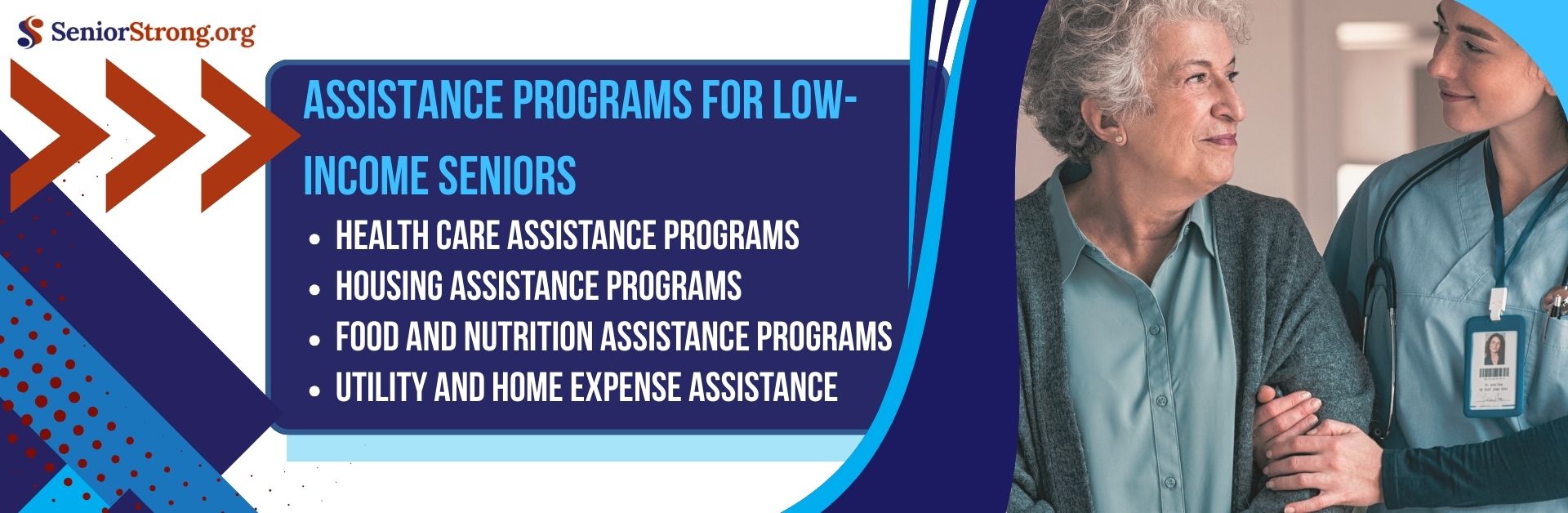
Millions of older adults may qualify for benefits that help with basic expenses such as food, health care, housing, and utilities, but many do not apply. NCOA highlights the importance of benefits assistance for older adults living on fixed incomes.
These programs may help reduce premiums, deductibles, and prescription costs (depending on eligibility).
Housing eligibility is often based on local income limits and program-specific rules.
These programs can help reduce monthly grocery costs and improve food security.
Programs vary by location, household composition, and income calculation rules.
Retirement can be a rewarding stage of life, but for many older adults, rising costs make it hard to cover essentials. Common challenges include:
NCOA also notes that living on a fixed income can be difficult as costs rise, which is why benefits programs and cost-saving resources can make a real difference.
If you’re trying to determine whether you are considered a low-income senior, here’s the best approach:
Gather:
Use the current HHS poverty guideline as a baseline reference.
Many programs use a percentage of FPL or local AMI thresholds. Housing programs especially depend on local HUD income limits.
Program access and waitlists can vary by state, county, and housing authority.
There is no single number that applies to every senior. Many programs use the Federal Poverty Guidelines as a baseline, while others (especially housing programs) use local income limits tied to area median income.
A low-income senior is generally an older adult whose income falls within the eligibility limits for assistance programs (such as health, food, housing, or utility assistance). Those limits vary by program and location.
Yes. Some programs use higher thresholds, such as a percentage of the poverty guideline (for example, 150% or 200% of FPL), or local income formulas.
Even if you don’t qualify for every assistance program, there are still ways to reduce monthly expenses:
Knowing what is considered low income for seniors is an important first step toward finding help with housing, health care, food, and everyday expenses. Because definitions vary by program and location, the best strategy is to use the federal poverty guideline as a starting point and then check the rules for each program you’re considering.
If you’re looking for practical ways to reduce expenses right now, explore Senior Strong’s Discounts and Perks page for money-saving opportunities designed for older adults.