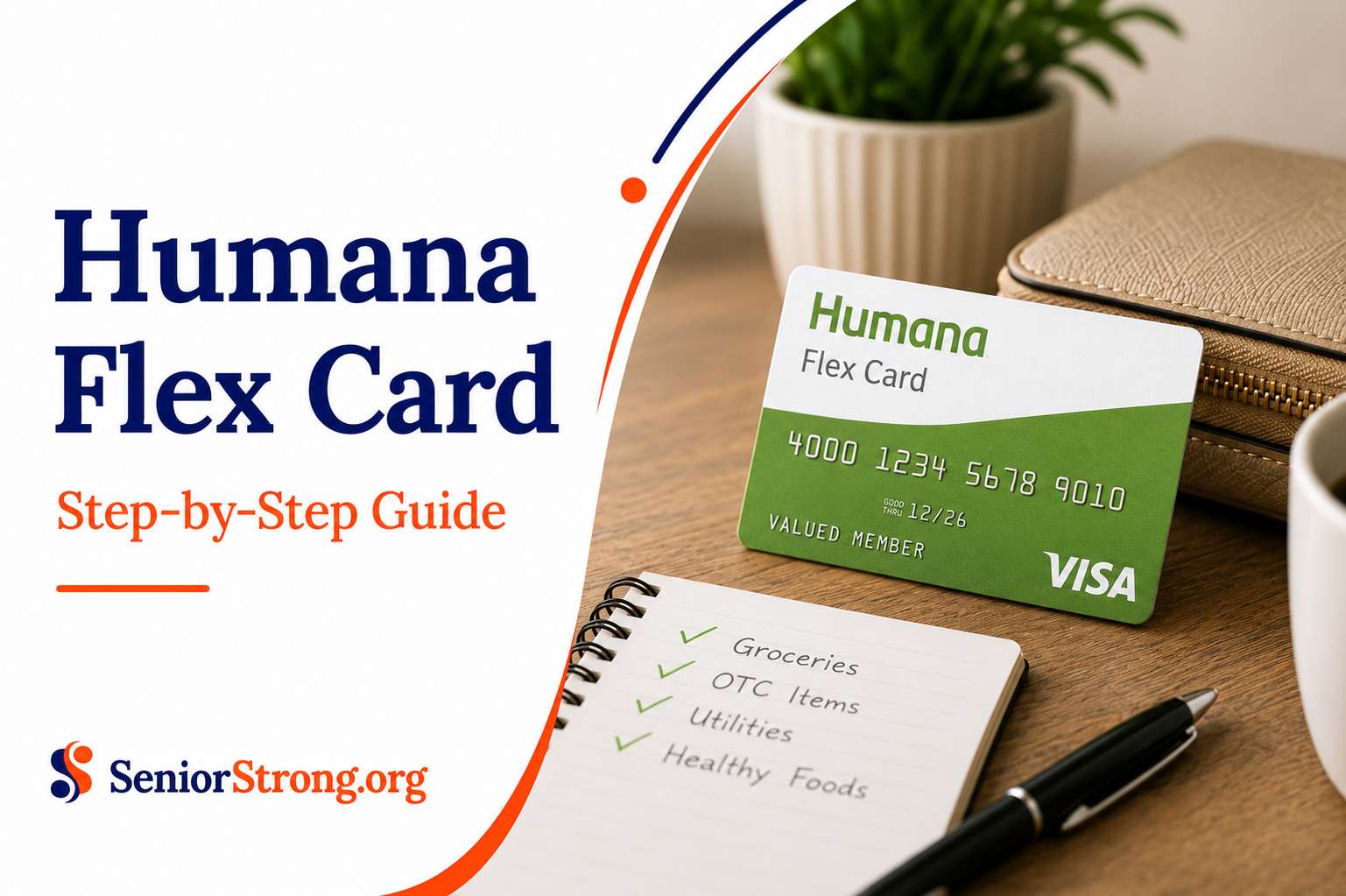
The Humana Flex Card is a prepaid benefits card issued to certain Humana MedicareA federal health insurance program for people who are 65 or older, certain younger people with disab... Advantage members, and you use it the same way you use any debit card at participating retailers to pay for approved items like over-the-counter medicine, groceries, utilities, and dental or vision copays. Humana officially calls it the Spending Account Card. You willA legal document that states how a person's property should be managed and distributed after death. not get one automatically with Original Medicare. The card is tied to specific Humana plans, and Special Needs Plans now account for 23% of all Medicare Advantage enrollment in 2026, with more than 8 million people enrolled in an SNP as of February 2026.
This guide walks you through eligibility, the three allowance types, how to activate the card, how to use it without losing money to common mistakes, and how to spot the flex card scams that target seniors every open enrollment season.
The Humana Flex Card is the common nickname for what Humana officially names the Humana Spending Account Card. It is a single prepaid debit card that holds one or more benefit allowances from your Humana Medicare Advantage planA type of Medicare health plan offered by a private company that contracts with Medicare to provide ..., loaded by Humana on a monthly basis. The card is not a Medicare card and is not issued by the federal government. It comes only with private Humana plans that include the benefit.
The card looks and works like a standard debit card. You swipe it at the register at participating retailers, and the cost of approved items is deducted from your available balance. If the total exceeds your allowance, you pay the difference with another payment method. According to Humana's official Spending Account Card page, the card cannot be used to get cash from a register or an ATM, and the allowance cannot be applied to Medicare-covered prescriptions or services.
Two things confuse people the most. First, the name. Marketing ads call it a flex card, and many sources online use the older 'flex card' language. Humana's internal name is Spending Account Card. Both refer to the same product. Second, the card type. Depending on your plan, your card might be issued through Healthy Benefits Plus (a Solutran program) or directly by Humana, but the rules and the MyHumana account management process are the same.
Eligibility for the Humana Flex Card depends on the specific Medicare Advantage plan you are enrolled in, not on age or general Medicare status. Three plan categories most commonly include a Spending Account Card in 2026: Dual Eligible Special Needs Plans (D-SNPs), Chronic Condition Special Needs Plans (C-SNPs), and a smaller group of standard Humana Medicare Advantage plans that offer an OTC or Flex allowance.
Most Humana D-SNPs include the Healthy Options Allowance. D-SNPs are restricted to people who have both Medicare and MedicaidA state and federal program that provides health coverage to eligible low-income adults, children, p..., and they remain the largest SNP category. Kaiser Family Foundation data shows 82% of all SNP enrollees are in a D-SNP. C-SNPs are limited to members diagnosed with qualifying chronic conditions such as diabetesA chronic condition that affects the way the body processes blood sugar (glucose), requiring ongoing..., chronic heart failure, chronic lung disorders, end-stage renal disease, or chronic and disabling mental health conditions. Most Humana C-SNPs also include the Healthy Options Allowance, and C-SNP enrollment grew 49% from 2025 to 2026, according to industry analyst HealthScape Advisors.
Other Humana Medicare Advantage plans may offer a smaller OTC or Flex allowance even if you do not qualify for a D-SNP or C-SNP. The exact allowance amount, what it covers, and how often it loads is plan-specific and listed in your Evidence of Coverage document. If you are not sure whether your plan includes one, check page 4 of your Summary of Benefits or call Humana customer service at 1-888-204-4062 (TTY 711). If you are already on a Humana plan and are later diagnosed with a chronic condition, you may qualify to switch to a C-SNP that includes the allowance by completing a Health Risk Assessment in MyHumana.
A practical note for adult children helping a parent: if a parent has both Medicare and Medicaid but is enrolled in a standard Medicare Advantage plan rather than a D-SNP, they are likely missing the Healthy Options Allowance entirely. Switching to a D-SNP during the next Special Enrollment Period (D-SNP members can change plans monthly under certain conditions) can unlock the benefit.
The Humana Spending Account Card holds one or more of three allowance types, and each works differently. The Healthy Options Allowance is the broadest, the OTC Allowance is the most common across plans, and the Flex Allowance is the most restricted. Here is a side-by-side comparison.
| Feature | Healthy Options Allowance | OTC Allowance | Flex Allowance |
|---|---|---|---|
| Who qualifies | Most D-SNP and most C-SNP members | Members with OTC benefit on any eligible MA plan | Members with dental, vision, or hearing benefits |
| Typical 2026 amount | Starts at $25/month, varies by plan and state | Monthly or quarterly, varies by plan | Annual or quarterly, varies by plan |
| Eligible purchases | Groceries, OTC items, utilities, rent, phone, internet, pet supplies, assistive devices | Vitamins, pain relievers, first aid, oral care, digestive aids, allergy medicine | Dental, vision, and hearing copays and coinsurance, eyeglasses, hearing aids |
| Rollover | Rolls over month to month, expires at plan year end | Plan-specific, some roll over, some expire monthly or quarterly | Plan-specific, often expires at year end |
| Cash withdrawal | Not permitted | Not permitted | Not permitted |
The Healthy Options Allowance is the benefit most often described as 'flex money for groceries.'
Once your card arrives in the mail, you cannot use it until it is activated. Below is the exact process for activating, checking your balance, and using the card in a store or online, based on Humana's official Spending Account Card FAQ.
Important: If your card is declined, the most common causes are an unactivated card, a non-participating retailer, or an item that is not on the approved list. Hand the card to the cashier for manual processing if the swipe fails. If the issue continues, call the number on the back of the card before assuming the card is canceled.
The single biggest reason members lose flex card money is buying items the card won't pay for. Each allowance has its own list, and the lists are stricter than people expect. Here is the practical breakdown of what is genuinely covered in 2026.
Approved purchases include produce, dairy, meat and seafood, deli, frozen and prepared foods, and bakery items. Eligible household items include toilet paper, paper towels, soap, shampoo, toothpaste, toothbrushes, cleaning supplies, furnace filters, fans, space heaters, and air conditioners. OTC items like allergy medicine, cold and flu medicine, vitamins, supplements, first aid, pain relief, and digestive health products are all covered. The allowance can also cover rent or mortgage, home phone, internet, electric, home heating, water, and sewer bills. Assistive devices like grab barsSafety devices installed in bathrooms and other areas to help seniors maintain balance and prevent f..., raised toilet seatsToilet accessories designed to increase the height of toilet seats, making it easier for seniors to ..., low-vision aids, and reaching aids are eligible. Pet food and pet supplies count too.
What is not covered: alcohol, tobacco, lottery tickets, firearms, items already covered by Medicare, prescription medications, and any service or product the plan does not approve. If you use the allowance for rent or utilities, the U.S. Department of Housing and Urban Development requires you to report it as income if you also receive HUD-based housing assistance.
The OTC allowance is narrower. Approved purchases include vitamins and minerals, pain relievers, cold and cough medicine, oral care products, including denture cream, first aid supplies, bandages, and digestive health products. Groceries are not covered under the OTC-only allowance. Members with this allowance can shop in-store at participating retailers, online through CenterWell Pharmacy, or by mail order using the printed catalog.
The Flex Allowance is the most restricted. It covers out-of-pocket costs only for covered dental, vision, and hearing services on your specific plan. That includes copays and coinsurance on dental visits, eyeglasses, contact lenses, hearing aids, and hearing exams. Some Flex Allowance benefits require submitting a claim to Humana before the card can be used at the provider's office. Read your Evidence of Coverage carefully before scheduling a procedure to confirm whether the Flex Allowance applies to that specific service.
The Healthy Options Allowance rolls over month to month within the plan year, but the unused balance expires at the end of the calendar year on December 31, or upon disenrollment, whichever comes first. There is no carryover to the next plan year. Members who let November and December slip past without using the balance lose every unspent dollar.
OTC allowance rollover varies by plan. Some plans roll over monthly within the plan year, others reset every month or every quarter. Your plan's Evidence of Coverage spells out the exact rule. The cleanest habit, especially if a parent is the cardholder, is to set a calendar reminder for the last week of every month to use the remaining balance on shelf-stable items like vitamins, toilet paper, or canned goods.
Allowance amounts cannot be combined across allowance types. If you have a Healthy Options Allowance and a Flex Allowance, they are separate buckets, even though they sit on the same card. You cannot pull Healthy Options dollars to pay a dental copay. Sales tax is the member's responsibility according to state regulations. The card cannot be used at ATMs and cannot be converted to cash.
Flex card scams are one of the most common Medicare fraud tactics targeting seniors in 2026, and they spike during open enrollment from October 15 through December 7. According to the Federal Trade Commission's 2025 open enrollment scam alert, scammers call seniors claiming to be from Medicare or a Medicare Advantage plan and offer a 'free' flex card worth hundreds of dollars in exchange for a Medicare number, Social Security number, or bank information.
Adults 60 and older reported $2.4 billion in fraud losses in 2024, a 300% increase from 2020, with grocery card and Medicare impersonation scams ranking among the most common tactics. Real Humana flex cards are never offered through cold calls, social media ads promising a $900 grocery card, or text messages. The card is a benefit of an existing Humana Medicare Advantage plan, not a freestanding government program. AARP's Fraud Watch Network has documented thousands of complaints about this specific scam since 2022.
Red flags that should make you hang up immediately:
If you receive a suspicious call, hang up. Do not press any number to 'be removed from the list.' Report the call to ReportFraud.ftc.gov and to your state's Senior Medicare Patrol (1-877-808-2468). If you already gave personal information, call 1-800-MEDICARE (1-800-633-4227) to confirm your enrollment status, and contact your bank if you shared financial details.
If you are an adult child helping a parent manage their Humana Spending Account Card, three habits prevent most problems. First, set up your parents' MyHumana account together and bookmark the balance page on their browser or phone. Many seniors lose money simply because they do not know their balance and stop using the card after a single declined transaction. Second, do a monthly review on or around the 25th. Pull up the balance, check what is left, and plan a shopping trip for shelf-stable approved items if there is a meaningful unused balance.
Third, share the scam warning above with your parent directly and write the number on the back of their Humana card next to their phone. For general Humana member support, Humana’s Spending Account Card FAQ lists 800-457-4708 (TTY 711). The Senior Medicare Patrol estimates that adult children who proactively coach a parent through one phone-based scam attempt reduce that parent's likelihood of being defrauded by more than half. If your parent has a cognitive impairment that makes monthly card management difficult, ask Humana about adding an authorized representative to the account.
The Humana Spending Account Card is one of the most useful supplemental benefits in Medicare Advantage, and in 2026, more seniors qualify for one than ever before because Special Needs Plans are growing faster than every other plan category. The card can absorb hundreds of dollars a year in real grocery, utility, and OTC costs for the seniors and dual-eligible members who use it consistently. The members who lose money on it are the ones who do not activate it, do not check their balance, or let December 31 pass with unused funds on the card.
Activate the card as soon as it arrives, check your balance monthly in MyHumana, use the Store Finder before shopping, and remind family members that real Humana card benefits are tied to a specific Medicare Advantage plan, not a random phone call or social media ad.
If groceries are the biggest concern, read our guide to the Medicare grocery allowance to understand how food benefits work, who may qualify, and what to check before choosing a plan.
Not exactly. 'Medicare flex card' is a generic marketing term used across many Medicare Advantage carriers. The Humana version is specifically the Humana Spending Account Card, which loads one or more allowances depending on your plan. Original Medicare does not offer flex cards. Only certain Humana Medicare Advantage plans, especially D-SNPs and C-SNPs, include one.
The Healthy Options Allowance amount varies by plan and location, with monthly amounts starting at $25 in 2026. Some plans load substantially more, and the amount can change based on state, plan type, and chronic condition. To find your specific amount, check your plan's Summary of Benefits or sign in to MyHumana and view the Spending Account section.
Walmart, Walgreens, CVS, Kroger, Dollar General, and many regional grocery stores commonly accept the card. Costco acceptance varies by location and allowance type. The most reliable check is the Store Finder tool in the MyHumana app or website. A store can stop participating without changing what it sells, so verify before you make a special trip.
The unused balance expires immediately upon disenrollment and cannot be refunded or transferred. If you are switching plans during open enrollment, spend downThe process of reducing an individual's assets in order to qualify for Medicaid, as one must meet fi... your balance before the effective date of the new plan. If you switch to another Humana plan that also offers the allowance, the card itself remains active for the new plan but starts on the new allowance schedule.
No. The card cannot be used for Medicare-covered prescription medications or any service already covered by Medicare. It is intended for items and services beyond what Medicare pays for, such as OTC medicine, groceries, certain utilities, and dental, vision, or hearing copays. For help in reducing prescription drug costs, specifically.
Call the number on the back of your Humana member ID card or sign in to MyHumana and go to Account Settings, then Your Cards, to request a replacement. Humana notes that the old card is deactivated once a replacement is requested. Humana is not responsible for unauthorized use of a lost or stolen card, so reporting it promptly protects your balance. You can also sign in to MyHumana and request a replacement card under Account Settings without calling.