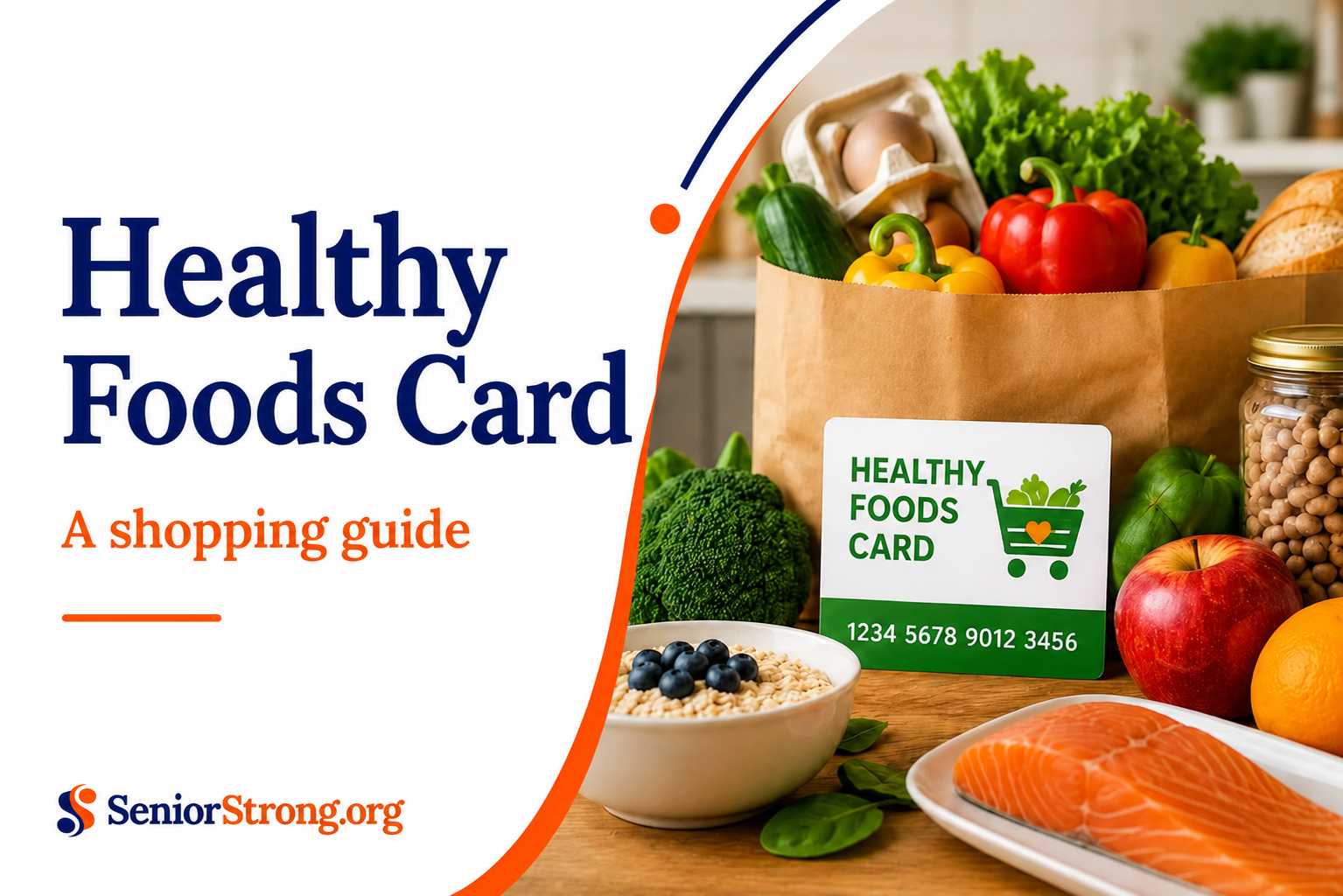
Most major U.S. grocery chains accept the healthy foods card, including Walmart, Kroger, Albertsons, Safeway, CVS, Walgreens, Aldi, Whole FoodsFoods that are not processed or refined and do not contain added ingredients, such as whole grains, ..., and a growing list of regional grocers and discount retailers. The exact stores accepted depend on your MedicareA federal health insurance program for people who are 65 or older, certain younger people with disab... Advantage plan's retailer network. In 2026, roughly 11 percent of general-enrollment Medicare Advantage plans, and about 85 percent of Special Needs Plans (SNPs), offer a food and produce allowance.
This guide walks through which stores accept the card, what you can buy, the most common reasons cards get declined at checkout, and how to confirm your plan's specific retailer network before you shop.
A healthy foods card is a prepaid debit card loaded each month or quarter by your Medicare Advantage plan to help you buy approved groceries, over-the-counter (OTC) products, and in some cases pay for utilities or rent. It goes by several names depending on the insurer: grocery allowance card, food allowance card, OTC card, flex card, or healthy benefits card. The Centers for Medicare & MedicaidA state and federal program that provides health coverage to eligible low-income adults, children, p... Services (CMS) categorizes most of these benefits under Special Supplemental Benefits for the Chronically Ill (SSBCI), a category Congress authorized beginning in 2020.
The card is not part of Original Medicare. According to AARP, grocery allowances are offered only by select Medicare Advantage plans, and most often by Special Needs Plans designed for people with chronic conditions or for those who qualify for both Medicare and Medicaid. If you have Original Medicare or a Medicare Supplement (MedigapPrivate health insurance that supplements Medicare by covering co-pays, deductibles, and other expen...) plan, you willA legal document that states how a person's property should be managed and distributed after death. not receive a healthy foods card.
Major insurance carriers that offer some version of the card include UnitedHealthcare (the UCard), Humana (Healthy Options Allowance), Aetna/CVS Health, Cigna, WellCare, Anthem Blue Cross Blue Shield, and Kaiser Permanente. Each plan sets its own monthly amount, eligible retailers, approved items, and rollover rules. Two seniors on different plans can carry identical-looking cards and have completely different shopping rules.
To qualify in 2026, you need to be enrolled in a Medicare Advantage plan that includes the benefit, and in most cases, you need a documented chronic health condition. The card is not automatic with Medicare. According to U.S. News & World Report, the grocery allowance is most commonly attached to Special Needs Plans (SNPs), which serve specific populations.
There are three main plan types where the benefit shows up:
One important 2026 change: the Value-Based Insurance Design (VBID) model, which let insurers offer grocery allowances based on geography, income, or health status, was terminated at the end of 2025. As WTOP News reported, the VBID program had provided rewards and incentives to more than 7 million beneficiaries in 2025. Some seniors who had a grocery allowance in 2025 may not have it in 2026 because they no longer meet the stricter SSBCI eligibility rules, which require certain medically complex chronic conditions. If your benefit disappeared this year, that is the most likely reason.
If you are not sure whether your current plan offers the benefit, your Annual Notice of Change (ANOC) letter from your insurer (mailed each fall before open enrollment) lists every change to your benefits for the coming year. You can also call your plan's member services line, or speak with a free, conflict-free counselor through your State Health Insurance Assistance Program (SHIP).
The list of participating retailers has grown each year as more insurers sign network deals. Below is a breakdown of retailers that may appear in some healthy foods card networks in 2026. Your specific plan determines which stores work with your card, so always confirm before shopping. Your specific plan determines which of these locations work with your card, so always confirm with your insurer before a large shopping trip.
| Retail Category | Retailers That May Accept the Card, Depending on Plan | Best For |
|---|---|---|
| National grocery chains | Walmart, Kroger, Albertsons, Safeway, Publix | Weekly groceries, broad inventory |
| Specialty grocers | Whole Foods Market, Trader Joe's, Sprouts Farmers Market | Organic, fresh produce |
| Discount grocers | Aldi, Save-A-Lot, Grocery Outlet | Stretching a fixed-income budget |
| Regional chains | Food City, Giant Eagle, ShopRite, Hy-Vee, Wegmans, H-E-B, Super 1 Foods | Local shopping where national chains are not available |
| Pharmacies | CVS Pharmacy, Walgreens, Rite Aid | OTC medications, vitamins, small grocery items |
| Discount and dollar stores | Dollar General, Family Dollar, Dollar Tree (select locations) | Convenient access in rural or underserved areas |
| Online and delivery | Walmart.com, Instacart, Amazon (plan dependent) | Homebound seniors, mobility-limited shoppers |
Note: Do not assume every location accepts your card. Confirm the retailer in your plan’s app, online store finder, or by calling the number on the back of your card before making a large shopping trip.
A few specific retailers worth highlighting for 2026: Walmart has integrated benefit cards directly into millions of Medicare Advantage accounts, letting eligible members shop for approved items on Walmart.com and in the app for pickup or delivery, as the company announced in 2025. Regional grocers like Food City have rolled out card acceptance more recently, with the chain announcing in February 2026 that its stores would begin accepting prepaid healthy foods benefit cards at checkout. Giant Eagle and Market District locations accept OTC benefit cards for health and wellness products through their pharmacy systems.
Yes, but it depends entirely on your plan and the retailer. Online and delivery use of the healthy foods card has expanded fast since 2023, and by 2026, it will have more options than ever. Walmart leads the pack, with the largest integration of Medicare Advantage benefit cards into a national grocery e-commerce platform. Members can add the card to their Walmart account and use it for same-day pickup or delivery on eligible items.
Instacart partners with several Medicare Advantage carriers, including UnitedHealthcare and Humana, but coverage varies by plan and even by ZIP code. Amazon Fresh and Whole Foods online ordering work with some flex cards, again depending on the insurer.
Three things commonly go wrong when seniors try to use the card online:
Healthy foods cards are restricted to specific item categories. Each plan publishes its own approved item list, and the point-of-sale system at the register checks every item against that list in real time. Knowing the basic categories before you shop saves time at checkout and prevents partial declines.
Commonly approved items:
Commonly excluded items:
Some D-SNPs and PACE plans include broader categories like utility bill payments, rent contributions, household supplies, and pet care for chronically ill members. Check your plan's Evidence of Coverage to see exactly what is approved.
A declined card at the register is one of the most frustrating experiences for cardholders. According to checkout-data analysis from Understood Care, the same handful of issues account for most rejected transactions. Here are the seven most common, with the practical fix for each.
Medicare Advantage (Part C): A type of Medicare plan offered by private insurers approved by Medicare. Healthy foods cards are only available through these plans, not through Original Medicare or Medicare Supplement (Medigap).
Special Needs Plan (SNP): A Medicare Advantage plan limited to people with specific conditions or characteristics. C-SNPs serve members with chronic conditions; D-SNPs serve members eligible for both Medicare and Medicaid.
SSBCI (Special Supplemental Benefits for the Chronically Ill): The federal category that authorizes non-medical benefits like grocery allowances. Eligibility requires a qualifying chronic condition documented by your provider.
OTC (Over-the-Counter) allowance: A separate or combined benefit for non-prescription medications, vitamins, and wellness items. Many plans combine OTC and healthy food allowances on the same card.
Flex card: A general industry term for any prepaid card issued by a Medicare Advantage plan. The flex card can be for OTC items, groceries, dental and vision out-of-pocket costs, or a combination, depending on the plan.
Annual Election Period (AEP): October 15 to December 7 each year. The window when you can switch Medicare Advantage plans for the following year's coverage if your current plan dropped the benefit or another plan offers a better one.
Understanding why these benefits exist helps explain why eligibility rules are so specific. Robby Knight, CEO and co-founder of Evermore, a financial services company that works on benefit-card health solutions, framed the policy goal in a 2026 Care.com interview: "The idea behind these non-medical supplemental benefits is that if people can take better proactive care of their health, they will face fewer health problems and costs in the future."
In other words, the grocery card is not a giveaway. It is a calculated bet by insurers that paying for produce, lean protein, and OTC medication is cheaper than paying for diabetes complications, heart failure hospitalizations, or repeat ER visits. That logic also explains why the benefit is concentrated in plans serving the chronically ill: those are the members where the math works out for both sides. The Kaiser Family Foundation has tracked Special Needs Plan enrollment growth each year, and Special Needs Plans remain the most likely place to find food and produce benefits.
From a caregiverAn individual who provides care to someone who needs help with daily tasks and activities due to chr... perspective, this also explains why eligibility audits happen. If your parent's plan asks for updated documentation of a chronic condition, that is not a hassle; it is the insurer confirming that the benefit still meets federal requirements. Helping your parent submit the paperwork on time can prevent a sudden loss of the card mid-year.
As of 2026, the network of stores that accept the healthy foods card is the broadest it has ever been: every major national grocery chain, the three biggest pharmacy chains, the leading discount grocers, and a growing number of regional chains and online platforms. What still varies, plan to plan, is which of those stores work with your card and what items qualify on a given day.
Before your next shopping trip, take five minutes to do three things: log in to your plan's member app or portal to check your current balance and reload date, confirm the participating retailer list for your specific plan, and review the approved item categories so you know what to keep separate at checkout. Those three checks prevent almost every common decline.
Need more help finding grocery support beyond your Medicare Advantage card? Senior Strong also explains other food and benefits programs that can help older adults stretch a fixed income. Learn about the top 10 local food assistance programs for seniors to compare options like SNAP assistance, Meals on Wheels, senior food pantries, and local nutrition programs.
Yes, Walmart accepts most major Medicare Advantage healthy foods cards at the register and increasingly online through Walmart.com and the Walmart app. Walmart has the largest direct integration of benefit cards into its e-commerce platform among national grocers. Your specific plan determines whether Walmart is in your retailer network.
Aldi accepts healthy foods cards at most U.S. locations, and the chain is popular among seniors using the benefit because of its low prices on fresh produce and pantry staples. Trader Joe's acceptance is more limited and depends heavily on the insurer; check your plan's participating retailer list before assuming Trader Joe's works.
Monthly allowances typically range from $25 to $275, with the average around $150, depending on the insurer, plan type, and ZIP code. Humana's SNP plans, for example, provide between $300 and $2,700 per year. D-SNPs (for dual-eligible members) usually have the largest allowances. Quarterly allowances on some plans run from $75 to $300.
Some plans accept the card at participating farmers markets, especially in states with Senior Farmers Market Nutrition Program partnerships. Most farmers markets are not directly integrated, however, so coverage is hit or miss. The safer approach is to use the card at a participating grocery chain for fresh produce.
Most healthy foods card balances are use-it-or-lose-it, meaning unused funds expire at the end of the monthly or quarterly cycle. A few plans allow limited rollover, but assume your funds expire unless your plan documents say otherwise. Check the reload date in your member portal and plan grocery trips around it.
Yes. During the Annual Election Period (October 15 to December 7), you can compare and switch to a different Medicare Advantage plan for the following year. Dual-eligible beneficiaries and people who qualify for a Special Enrollment Period may be able to switch outside that window. A free SHIP counselor in your state can walk you through your options without trying to sell you anything.